- DISTRIBUTION : Native to South Asia and Southeast Asia, found in China, India, Vietnam, Nepal, and Cambodia, but also Malaysia, Bangladesh, Bhutan, Laos, Myanmar, and Thailand.
- HABITAT : They prefer habitats associated with water, such as paddy fields, swamps, and mangroves, but can also be found in grasslands, scrublands, and forests. The species also occurs in agricultural land and human settlements including cities.
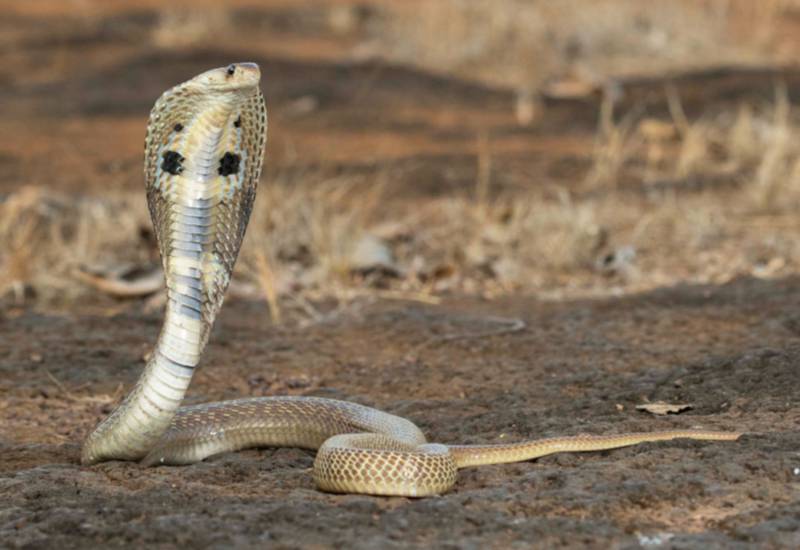
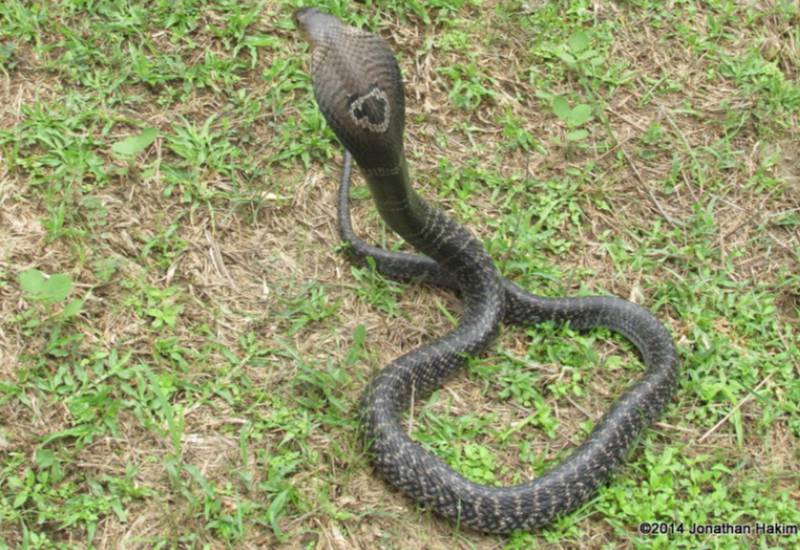
- BEHAVIOUR AND FOOD HABIT : Monocled cobras are terrestrial and most active at dusk. In rice-fields, they hide in rodent burrows. When threatened they will raise the anterior portions of their bodies, spread their hood, usually hiss loudly, and strike in an attempt to bite and defend themselves. Some populations of the monocled cobra have the ability to spit venom. Juveniles feed mostly on amphibians whereas adults prey on small mammals, snakes and fish.
- FOOD SERVED HERE : Live Frogs, Rats.
- BRIEF DESCRIPTION :
1. BODY LENGTH- 150 cm
2. BODY WEIGHT- About 6 kg
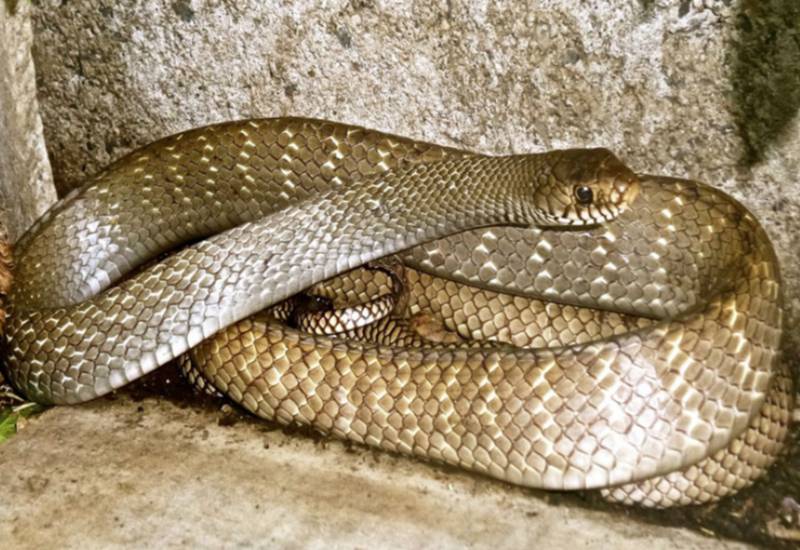
3. BODY COLOUR - Shows wide range of colors including dark Yellow, light or dark brown, reddish-brown, black with reddish or grayish ting etc. Bands present in most of the specimens and have contrasting color with main dorsal color. Belly color can also range from milky white or white mixed with yellow, gray, brown etc. Sometimes dark colored patches also present. When angered, it stretches hood to show the rounded hood mark. Hood mark design may be in the form of complete rounded spot like eye or moon, may be open from top like Spectacled Cobra or can join with edge of the hood. - LIFE-SPAN : 15 - 20 years
- THREAT : Habitat loss, pollution and poisoning in agricultural lands and Exploitation, poaching for its venom, pet & skin trade.
- CONSERVATION STATUS : Least Concern